
Mathematics of Extreme Events in Nature
Lecturers
Professor Jason Sharples, UNSW Canberra
Dr Difei Deng, UNSW Canberra
Dr Chantelle Blachut, UNSW Canberra
Dr Courtney Quinn, University of Tasmania
Synopsis
The goal of this course is to introduce students to simple but important mathematical techniques used in the modelling and assessment of the three major hazards that drive economic loss in Australia – bushfires, cyclone and flooding. Critically, these hazards exert significant influence on the international community more generally whilst also increasing in frequency. The course will begin with a gentle introduction to the modelling of grassland fire spread and how considering simple changes in terrain and wind speed can lead to dramatically altered conclusions. Students will then move on to learning about how mathematical techniques can be employed to model the genesis of tropical cyclones, their structural change and final impact. Finally, the course will teach students skills that allow them to detect at what point a natural hazard becomes an extreme event.
Course Overview
Weeks 1 & 4: Extreme bushfire behaviour (Part 1)
- This aspect of the course is an introduction to the modelling of fire behaviour. It will begin by going through the fundamentals of modelling the most simple grassland fires in idealised circumstances. The course will then move on to considering the impact that altered topography and wind will have on the development of extreme fire events (scalar versus vector methods) and how different methods used to tackle this problem might vary.
Week 2: Tipping behaviour in weather systems
- This aspect of the course will concentrate on the initiation and termination of extreme weather events through the lens of tipping in a dynamical system. It will begin with a basic introduction to the three types of tipping in time-dependent systems: bifurcation-, noise-, and rate-induced. It will then connect to the specific extreme events previously covered, bushfires and tropical cyclones, and identify which aspects of those events could be viewed as a critical transition (tipping). Finally, it would cover the calculation of various early warning signals for tipping and where these apply in the individual cases.
Week 3: Modelling Tropical Cyclones
- This aspect of the course will concentrate on teaching students about modelling the structure and impact of tropical cyclones (TCs). It would also incorporate methods on the modelling of wind and rainfall (ie. the general progression would be from TC climatology, genesis, structural change to final impact). A final extension point, that would not be incorporated in to the assessable quiz, might be to introduce students to the way in which mid-latitude cyclones differ from TCs. The goal being to whet students’ appetite for further research.
Prerequisites
The mathematical focus will not be overly complex and limited to second year calculus, namely differentiation and integration techniques.
The aim of the course is to get students thinking about the unique ways in which foundational mathematics can be used to understand the world and times in which they are living. As such no expert knowledge of any field is required.
Assessment
- 4x Worksheet/problem sets (due at the end of weeks 1, 2, 3 & 4) – 12.5% each (50% total)
- Final exam (invigilated in home city) – 50%
Resources/pre-reading
Ren, J., Tao, Y. (2026). Introduction to Dynamical Systems. In: Modeling in Life Sciences and Ecology. Springer Asia Pacific Mathematics Series, vol 4. Springer, Singapore. https://doi.org/10.1007/978-981-95-1038-2_1;
Wells, Gail. (2008). The Rothermel fire-spread model: still running like a champ. JFSP Fire Science Digest. March 2008(2):1-12.
https://digitalcommons.unl.edu/cgi/viewcontent.cgi?article=1001 &context=jfspdigest
Not sure if you should sign up for this course?
Take this pre-enrolment QUIZ to self evaluate and get a measure of the key foundational knowledge required.
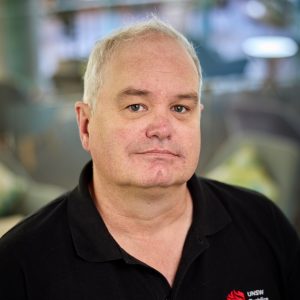
Professor Jason Sharples, University of New South Wales
Jason Sharples is a mathematical scientist at the University of New South Wales (UNSW), Professor of Bushfire Science, and founding Director of UNSW Bushfire. As an internationally recognised expert on extreme wildfire behaviour, he uses advanced mathematical and computational models to understand fire propagation and identify conditions that drive catastrophic fires, influencing research, policy, and practice in Australia and internationally. He holds senior leadership and investigator roles across multiple national research centres and is a Fellow of several leading scientific academies. He has provided expert advice to fire agencies, Coronial and Parliamentary Inquiries, and Royal Commissions.
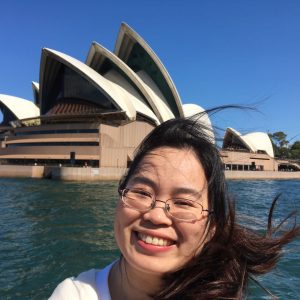
Dr Difei Deng, University of NSW, Canberra
Dr Difei Deng is a Lecturer in Meteorology and Atmospheric Science at UNSW Canberra. Her research focuses on tropical cyclones, severe weather, and atmospheric dynamics, with particular interests in tropical cyclone structure, rainfall, and climate change impacts. She has extensive experience using numerical weather prediction models, reanalysis datasets, and satellite observations to investigate extreme weather processes. Dr Deng teaches undergraduate and postgraduate courses in meteorology, remote sensing, and atmospheric physics, and is passionate about helping students connect fundamental atmospheric dynamics with real-world weather systems through quantitative analysis and case studies.

Dr Chantelle Blachut, University of New South Wales
Chantelle is a post-doctoral research fellow at the University of New South Wales (UNSW) who uses mathematics to identify and analyse some of the strange things we see in nature. Her research utilises numerical modelling, dynamical systems and ergodic theory to develop techniques that identify structures of physical interest and signal atypical behaviour, for example in the way fire can move strangely about ridgelines or how the annual evolution of the Southern Polar vortex can change in unexpected ways. Mathematics permeates the world around us and Chantelle is passionate about giving students the tools they need to understand this.

Dr Courtney Quinn, University of Tasmania
Courtney is a lecturer in applied mathematics at the University of Tasmania as well as an affiliate researcher with the CSIRO Environment Business Unit. Her expertise is in the areas of dynamical systems, models with delay, critical transitions, geophysical fluid dynamics, and conceptual climate modelling. She completed an MSc in Atmosphere Ocean Dynamics at the University of Leeds, with her dissertation focused on the eyewall replacement cycle in tropical cyclones. Following this she attained a PhD at the University of Exeter on the topic “Delayed effects and critical transitions in climate models”. Her work with CSIRO explores the crossovers between dynamical analysis and machine learning methods applied to climate variability.