
Physics-Informed Neural Networks for Scientists and Engineers
Lecturer
Dr Quoc Thong Le Gia, UNSW Sydney
Synopsis
This course introduces Physics-Informed Neural Networks (PINNs) as a modern, mesh-free approach for solving differential equations arising in science and engineering. Students learn how neural networks can be used as flexible function approximators whose parameters are trained to satisfy physical laws expressed as differential equations, boundary conditions, and initial conditions.
Starting from first principles, the course develops only the essential ideas of neural networks and optimization, with no prior background in machine learning assumed. These tools are then combined with concepts from calculus and partial differential equations to construct and implement PINNs for solving linear and nonlinear, steady and time-dependent problems.
Course Overview
Week 1 – From Functions to Neural Networks (7 hours)
- Why Neural Networks for PDEs?
- Review: PDEs and boundary value problems, Classical solvers (FDM/FEM): strengths & weaknesses, Idea: approximating solutions as functions, Linear regression -> nonlinear regression, Composing simple functions, Neural networks as parameterized functions
- Neural Networks Without the Hype
- Single neuron = affine map + nonlinearity, Multi-layer perceptron (MLP), Activation functions (ReLU, tanh), Loss functions (mean squared error), Gradient descent (geometric intuition), Backpropagation (conceptual, algebraic equations given)
- Tutorial: Training Your First Neural Network
Week 2 – Neural Networks Meet Differential Equations (7 hours)
- Automatic Differentiation for Physics
- Symbolic vs numerical vs automatic differentiation, Chain rule in computational graphs, Computing first and second order partial derivatives, Why autodiff is ideal for PDEs
- From PDEs to Loss Functions
- Boundary conditionsCollocation points, Strong form of PDEs, Example: Poisson equation, Constructing the PINN loss (PDE residual & Soft enforcement of physics)
- Tutorial: Solving a PDE with a PINN
Week 3 – Time, Nonlinearity and Stability (7 hours)
- Time-Dependent Problems
- Adding time as an input variable, Initial conditions (Example Heat equation), Global-in-time vs time-marching, Comparison with explicit/implicit schemes
- Nonlinear PDEs & Training Challenges
- Nonlinear equations (Burgers’ equation), What can go wrong? (Slow convergence & Wrong solutions), Intuition (not proofs) (Why optimization is hard Smoothness bias of neural networks), Role of sampling points
- Tutorial: Burgers’ Equation Case Study
Week 4 – Understanding Using and Questioning PINNs (7 hours)
- PINNs vs Classical Numerical Methods
- Accuracy vs cost, Mesh-free vs mesh-based, When PINNs make sense (Inverse problems & Sparse data), When they don’t (High-frequency solutions & Multiscale problems)
- Applications & Outlook
- Inverse problems (unknown coefficients), Data-assisted PINNs, Real-world examples (fluids, diffusion), Brief overview of advanced methods (no details), Ethical and scientific reproducibility issues
- Tutorial: Guided Mini-Project
Prerequisites
- Multivariable calculus
- Linear algebra
- Ordinary & partial differential equations
- Basic programming (Python preferred)
Assessment
- 2x assignments (due weeks 2 & 3) – 15% each (30% total)
- Group project (due week 4) – 20%
- Final exam (2hrs + 15 mins reading time, invigilated in home city) – 50%
Resources/pre-reading
Not sure if you should sign up for this course?
Take this pre-enrolment QUIZ to self evaluate and get a measure of the key foundational knowledge required.
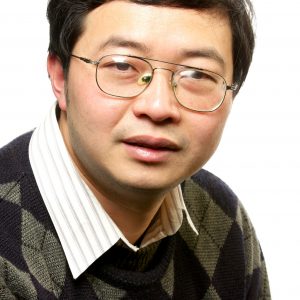
Dr Quoc Thong Le Gia, University of NSW, Sydney
Dr Quoc Thong Le Gia is an Associate Professor in the School of Mathematics and Statistics at UNSW Sydney. His research focuses on numerical analysis, approximation theory, partial differential equations, stochastic PDEs, uncertainty quantification, and scientific machine learning. He has made significant contributions to numerical methods for PDEs on spheres and surfaces, radial basis function methods, and computational mathematics. More recently, his research has expanded to machine learning techniques for solving differential equations and inverse problems. He has led Australian Research Council (ARC) funded projects and has supervised numerous PhD, Honours, and Master’s students.